Your Classroom Pot of Dirt Is Teeming With Life—And It Looks a Lot Like You
Here's something worth telling your students on a Monday morning: there are more microorganisms in a single teaspoon of healthy soil than there are people on Earth. Let that land for a second. That little terracotta pot sitting next to the window—the one with the pothos or the snake plant or whatever has survived your school's heating system—is home to an entire invisible universe. And here's the twist that makes this genuinely exciting for science class: that universe looks a whole lot like the one living inside the human gut.
Welcome to the microbiome conversation. It's happening in medical journals, in nutrition circles, and increasingly in ecology research. It's about time it happened in more K–12 classrooms too.
What Even Is a Soil Microbiome?
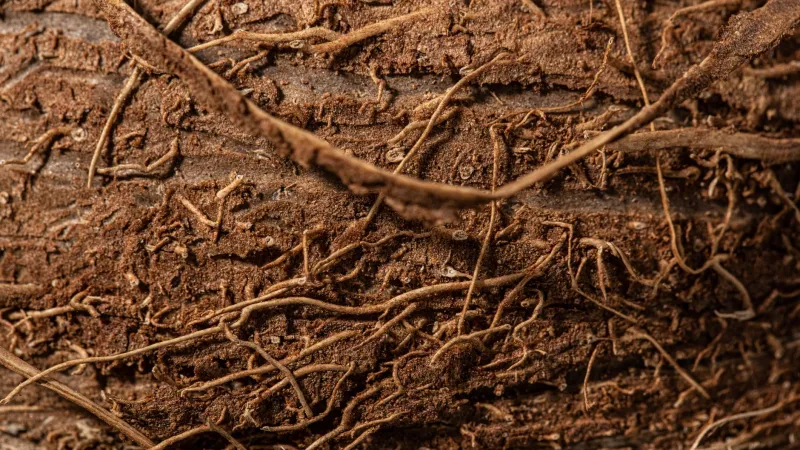
When most people think about what's in soil, they picture dirt—maybe some worms if they're feeling generous. But healthy soil is actually one of the most biologically dense environments on the planet. It's packed with bacteria, fungi, protozoa, nematodes, and archaea, all interacting in ways that scientists are still working to fully understand.
For classroom purposes, the two heavy hitters worth focusing on are bacteria and mycorrhizal fungi. Beneficial soil bacteria like Bacillus subtilis and Rhizobium species help break down organic matter and make nutrients available to plant roots. Mycorrhizal fungi do something even wilder—they physically extend a plant's root system by forming thread-like networks called hyphae that reach far beyond where roots can grow on their own. These networks can connect multiple plants, facilitating the exchange of water, carbon, and nutrients across what researchers sometimes poetically call the "Wood Wide Web."
This isn't science fiction. It's happening right now in whatever potting mix your classroom plant is sitting in.
The Human Gut Connection
Now here's where the lesson gets really interesting for students—especially older ones who are starting to think about biology, health, and how their own bodies work.
The human gut microbiome operates on eerily similar principles. Your digestive system hosts somewhere between 10 trillion and 100 trillion microbial cells, representing thousands of bacterial species. Just like in soil, these microbes aren't freeloaders—they're doing critical work. They help digest food, synthesize vitamins, regulate immune responses, and even influence mood through what researchers call the gut-brain axis.
Draw the comparison on your whiteboard and watch students start making connections on their own:
- Soil bacteria break down organic matter → Gut bacteria break down food
- Mycorrhizal networks move nutrients between plants → Gut microbial communities share metabolites that affect whole-body health
- Disrupted soil microbiomes lead to sick or stunted plants → Disrupted gut microbiomes are linked to conditions like IBS, allergies, and even depression
- Antibiotics in agricultural runoff damage soil ecosystems → Antibiotic overuse in humans disrupts gut flora
That last one especially tends to spark real conversation. Students who've been on antibiotics—which is most of them—suddenly have a personal entry point into a genuinely complex scientific topic.
Turning the Classroom Plant Into a Living Lab
You don't need a university research budget to make this tangible. Here are a few accessible ways to bring soil microbiome science into your classroom using the plants you already have.
Healthy vs. Depleted Soil Comparison Grab two small pots. Fill one with rich, organic potting mix and the other with heavily compacted or nutrient-poor soil (you can simulate this by mixing in a lot of sand or using old, exhausted potting mix). Plant identical seedlings in both and track growth over several weeks. The visual difference between a plant with a thriving microbial community and one without is often dramatic enough to make the point without a microscope.
The Decomposition Observation Bury small pieces of organic material—a leaf, a piece of fruit, a scrap of paper—in your classroom plant's soil and check on them weekly. Students can journal what they observe and hypothesize about which microorganisms are doing the work. This is a low-tech but high-engagement way to make decomposition feel real.
Fermentation as a Bridge Concept If your school has even minimal lab supplies, a simple fermentation demonstration using yeast and sugar can bridge the gap between soil microbiology and gut biology. Yeast—a fungus—is a microorganism students can actually watch doing something. It's a short hop from there to discussing how fermented foods like yogurt, kimchi, and kombucha introduce beneficial bacteria into the human gut, and why that matters.
Mycorrhizal Network Mapping For a more visual, art-meets-science project, have students research mycorrhizal networks and then create large-scale diagrams mapping how a single fungal network might connect multiple plants. Compare these diagrams side-by-side with illustrations of the human nervous system or vascular system. The structural similarities are striking and tend to stick with students in a way that a textbook diagram alone won't.
Why This Lesson Matters Beyond the Classroom
Teaching students about soil microbiomes isn't just a clever way to sneak more biology into the school day. It's part of a bigger shift in how we understand environmental health and human health as deeply connected—not separate domains.
In the US, we're seeing growing public health interest in the relationship between biodiversity loss and disease. Researchers are studying how children raised with exposure to diverse microbial environments—think farms, gardens, outdoor play in varied ecosystems—tend to have more robust immune systems than those raised in highly sanitized settings. The "hygiene hypothesis" has been evolving into what some scientists now call the "old friends" hypothesis: the idea that humans co-evolved with certain microorganisms and need ongoing exposure to them to function optimally.
Your classroom plant is, in a small but meaningful way, a portal to that world. Students who learn to see soil as a living system rather than inert filler are students who are more likely to understand why protecting wetlands matters, why industrial agriculture's relationship with soil health is complicated, and why the phrase "we are what we eat" goes about ten layers deeper than most people realize.
Starting Small, Thinking Big
You don't have to overhaul your curriculum to make this work. Start with a single conversation. Hold up a handful of potting mix and ask your students: what do you think is living in here right now? Let them guess. Let them be wrong. Then tell them the answer.
Watch their faces when they realize that the invisible world in that pot—the bacteria, the fungi, the whole teeming network of life that keeps a plant fed and healthy—is not so different from the invisible world keeping them alive too.
That's the kind of lesson that doesn't stay in the classroom. It goes home. It gets repeated at dinner tables. It changes how a kid thinks about dirt, about food, about their own body, and about the planet they're inheriting.
All from one pot on a windowsill. Not bad for a Monday morning.