Rooted in Place: The Case for Putting Native Plants at the Heart of Every School Garden
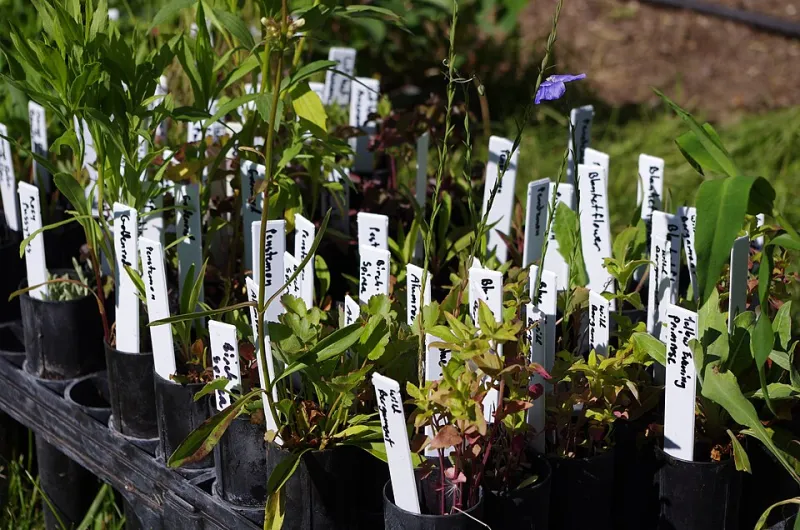
Photo: Forest Service Northern Region from Missoula, MT, USA, Public domain, via Wikimedia Commons
Let's be honest: most school gardens are full of marigolds and sunflowers. And look, we love a cheerful marigold as much as anyone. But if we're serious about teaching kids to understand and care for the natural world around them, we need to go deeper than what's on sale at the big-box hardware store in April. We need to go native.
Native plants — species that evolved naturally in a specific region over thousands of years — are arguably the most powerful teaching tools available to any educator with a patch of soil and a curious class of students. They're not just ecologically important. They're ecologically essential. And when students understand why, something shifts in how they see the landscape around them. That shift is exactly what environmental education is supposed to create.
What Makes a Plant "Native" — and Why Does It Matter?
A native plant is one that occurred naturally in a particular region before European colonization. These species developed alongside local insects, birds, fungi, and soil microbes over millennia, creating intricate, co-dependent relationships that non-native species simply can't replicate.
Here's a striking example: research by entomologist Doug Tallamy at the University of Delaware found that native oaks support over 500 species of caterpillars, while non-native ornamental trees like Bradford pears support fewer than five. Those caterpillars are the foundation of the food web — they feed the birds that feed larger animals, and so on. When we fill our landscapes with non-native plants, we're essentially pulling threads out of the ecological fabric, and the whole thing starts to unravel.
For students, this isn't abstract. A school garden planted with native species becomes a live demonstration of ecological interdependence that no textbook can match.
Pollinators, Partnerships, and the Web of Life
One of the most immediate and visible lessons native plants offer is the relationship between plants and pollinators. Native bees — there are roughly 4,000 species in the United States — have evolved alongside native flowering plants. Many of these bees are specialists, meaning they can only collect pollen from specific plant families. A specialist bee that depends on native goldenrod, for instance, simply cannot survive in a landscape full of non-native ornamentals, no matter how pretty they look.
When your classroom garden includes native wildflowers — purple coneflower (Echinacea purpurea) in the Midwest, wild columbine (Aquilegia canadensis) in the Northeast, California poppy (Eschscholzia californica) on the West Coast, or black-eyed Susan (Rudbeckia hirta) across much of the South — students can observe real pollinator activity. They can document which bee species visit which flowers, track the timing of blooms against pollinator emergence, and begin to understand why phenological alignment matters for ecosystem health.
This is living science. It's also deeply relevant to some of the most pressing conservation issues of our time. Monarch butterfly populations have declined by over 80% in recent decades, and the loss of native milkweed (Asclepias species) — the only plant monarch caterpillars can eat — is a significant driver. Planting native milkweed in a school garden and raising monarchs is one of the most compelling, emotionally resonant lessons an educator can offer.
Watersheds, Soil, and the Hidden Work Native Plants Do
Above-ground pollinator relationships get a lot of attention, but the work native plants do underground and in watersheds is just as important — and just as teachable.
Native plants typically have much deeper, more extensive root systems than non-native turf grass or ornamental species. Prairie plants like big bluestem (Andropogon gerardii) can send roots ten feet or more into the soil. These deep roots hold soil in place during heavy rain, reduce runoff, filter pollutants before they reach waterways, and build organic matter that supports soil microbial communities.
In a school garden context, you can make this tangible. Compare the water absorption of a bed planted with native grasses versus a patch of conventional lawn. Students can observe and measure runoff after a rainstorm, test soil health in native versus non-native planted areas, and connect these observations to real watershed issues in their community — whether that's nutrient pollution in the Chesapeake Bay, algal blooms in the Great Lakes, or erosion along Gulf Coast wetlands.
This is where environmental education becomes genuinely local and genuinely urgent. Students aren't learning about abstract environmental problems. They're learning about their watershed, their community, their home.
Making It Work Across Climate Zones
One of the most common pushbacks on native plant gardening in schools is the assumption that it's complicated or regionally limiting. It's neither. Every region of the United States has a rich palette of native species that are well-adapted to local conditions and relatively easy to grow.
- Pacific Northwest: Red flowering currant (Ribes sanguineum), Oregon grape (Mahonia aquifolium), and native ferns thrive in shaded or partially shaded school gardens.
- Desert Southwest: Desert marigold (Baileya multiradiata), globe mallow (Sphaeralcea ambigua), and native agaves are drought-tolerant and visually stunning.
- Great Plains: Little bluestem (Schizachyrium scoparium), prairie dropseed (Sporobolus heterolepis), and native sunflowers are tough, beautiful, and wildlife-rich.
- Southeast: Beautyberry (Callicarpa americana), native azaleas, and swamp milkweed are excellent choices for humid, warm climates.
- Northeast and Mid-Atlantic: Wild bergamot (Monarda fistulosa), native asters, and Virginia sweetspire are reliable performers that attract incredible pollinator diversity.
The Lady Bird Johnson Wildflower Center's native plant database (wildflower.org) is an invaluable resource for identifying regionally appropriate species, and many state native plant societies offer educator discounts or donation programs.
Connecting Students to Regional Conservation
A native plant garden isn't just a teaching tool — it's a connection point to the broader conservation community. And that connection can be transformative for students who are increasingly aware of environmental challenges but often feel powerless to respond.
Encourage students to register their school garden with the National Wildlife Federation's Certified Wildlife Habitat program. Connect with your state's Native Plant Society — many offer school outreach, seed donations, and volunteer support. Participate in community science programs like the Xerces Society's pollinator monitoring initiatives or the North American Butterfly Association's butterfly counts.
When students see that their garden is part of a larger network of habitat — a stepping stone in a corridor that connects fragmented wild spaces across a region — the work takes on a different meaning. They're not just gardening. They're doing conservation.
The Bottom Line
We started A Plant In Every Classroom because we believe that access to living plants changes how students understand and relate to the natural world. Native plants take that mission to its fullest expression. They teach ecology, not just botany. They connect students to place, to history, and to the urgent environmental challenges their generation will inherit.
Choosing native species for your school garden is a progressive, intentional act — a small but meaningful commitment to the idea that education should prepare kids not just for tests, but for the world. And right now, the world needs young people who understand what's at stake when we lose the plants that have always been here.
Plant native. Teach deep. Grow the next generation of people who know how to take care of this place we all share.