Little Growers, Big Impact: Launching a Student-Run Plant Propagation Station in Your Classroom

Photo: LiCheng Shih, CC BY 2.0, via Wikimedia Commons
There's something quietly magical about watching a kid's face the first time they realize that a single leaf — just a leaf — can become a whole new plant. That moment of wonder? That's exactly what we're here for at A Plant In Every Classroom. And honestly, it's also a pretty solid argument for building a propagation station right in your classroom.
A student-led propagation program isn't just a science activity. It's a living, breathing curriculum that connects kids to biology, ecology, math, and even community service — all while greening up your school one cutting at a time. Whether you're working with a kindergarten class or high school biology students, this kind of program scales beautifully. Let's dig in.
What Even Is a Propagation Station?
In plain terms, propagation is the process of growing new plants from existing ones. Instead of starting from a seed packet every time, students learn to multiply plants using cuttings, division, or layering. It's the same technique your grandma used when she snipped a piece of her pothos and stuck it in a glass of water on the windowsill.
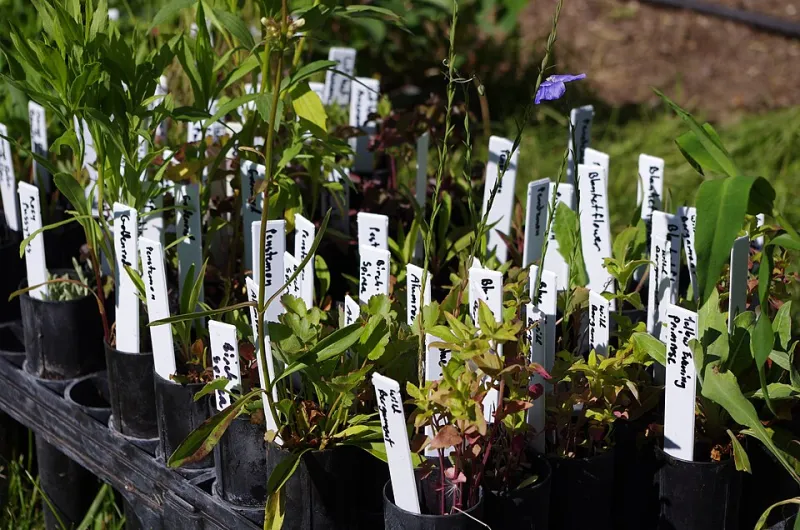
A propagation station is simply a dedicated space — a table, a shelf, a sunny corner — where this work happens consistently. It doesn't need to be fancy. A few clear plastic cups, some potting mix, a spray bottle, and good natural light are enough to get started. Many teachers repurpose old bookshelves or use a folding table near a south-facing window. Some schools have even converted unused lockers into vertical propagation units. Creativity counts here.
Getting Started Without Breaking the Budget
One of the biggest myths about classroom gardening is that it requires significant funding. It really doesn't. Here are some genuinely low-cost ways to stock your station:
- Ask families for cuttings. Send home a note asking parents and guardians to donate a cutting from a healthy houseplant. You'll be amazed how quickly your collection grows.
- Connect with your school's existing garden. If your school already has outdoor beds, there are likely plants that can be divided or propagated without any cost.
- Reach out to local nurseries. Many independent garden centers across the US will donate starter materials to schools, especially if you frame it as a community partnership.
- Raid the dollar store. Plastic cups, popsicle sticks for labels, and small spray bottles are all available cheaply and work perfectly well.
For growing medium, a simple mix of perlite and potting soil works for most cuttings. Some plants — like pothos, spider plants, and coleus — root so easily in plain water that you don't even need soil to start.
The Science Behind the Learning
Here's where it gets exciting for educators who need to justify every activity against learning standards. Propagation aligns naturally with Next Generation Science Standards (NGSS) at multiple grade levels. Students observe and document plant structures (LS1.A), explore how organisms reproduce (LS3.A), and can even investigate environmental variables that affect growth rates — temperature, light, humidity — which connects to scientific inquiry practices.
At the elementary level, propagation is a concrete, tangible way to explore the concept that living things come from living things. Middle schoolers can get into the cellular mechanics of why cuttings form roots. High school students can design controlled experiments comparing propagation success rates across different species or soil compositions.
Math sneaks in too. Tracking growth rates, calculating germination percentages, graphing data over time — it all fits naturally into a propagation project without feeling forced.
Assigning Student Roles That Build Real Ownership
The "student-led" part of this program is what makes it stick. When kids have genuine responsibility, engagement goes way up. Consider rotating weekly roles:
- The Waterers — responsible for monitoring moisture levels and watering as needed
- The Documenters — keeping a growth journal with sketches, measurements, and observations
- The Propagators — working with the teacher to take new cuttings and prepare them for rooting
- The Ambassadors — coordinating plant donations to other classrooms (more on this below)
Older students can take on more complex roles, including researching which species propagate most successfully in your region's climate. In states like Florida or California, tropical species are easy to maintain year-round. In Minnesota or Vermont, cold-hardy herbs and native wildflowers might be more practical choices.
Building a District-Wide Network of Green Classrooms
Here's where the program becomes something genuinely bigger than your four walls. Once your propagation station is producing healthy plants consistently, you have an opportunity to share the wealth.
Start by reaching out to other teachers in your building. Offer to donate a few propagated plants to any classroom that wants them. Include a simple care card written by your students — it's a great writing activity and helps the receiving classroom actually keep the plant alive.
As word spreads, you can formalize the process. Some schools have created a "Plant Library" model, where classrooms can request plants from the propagation station the same way they'd request books from the school library. Others have set up a simple Google Form where teachers across the district can put in requests for specific species.
The students who deliver these plants become what we love to call botanical ambassadors — kids who are literally spreading green spaces across their school community. That's not a small thing. Research consistently shows that access to plants and nature in school environments improves student focus, reduces stress, and supports overall well-being. Your propagation program isn't just teaching science. It's making school a better place to be.
Keeping the Momentum Going
The biggest challenge with any classroom program is sustainability. Here are a few things that help:
- Document everything. Photos, student journals, and growth charts create a record that helps next year's class pick up where this one left off.
- Loop in your administration. When principals see the cross-curricular value and the community impact, they're more likely to support the program with a small budget line.
- Connect with your PTA or PTO. Parent organizations often have small grants or fundraising capacity that can help cover supplies.
- Tap into national resources. Organizations like the National Gardening Association offer educator grants, and many state departments of education have green schools initiatives worth exploring.
At the end of the day, a propagation station is one of the most elegant things you can bring into a classroom — it's alive, it changes every day, and it gives students something real to care for. That combination is rare in a school setting, and it matters more than any worksheet ever could.
So grab a few cuttings, clear off a sunny shelf, and let your students start growing something. The seeds of environmental stewardship — both literal and figurative — are planted one classroom at a time.