One Plant, One Kid, One Whole School Year: What Happens When Students Become Botanical Mentors
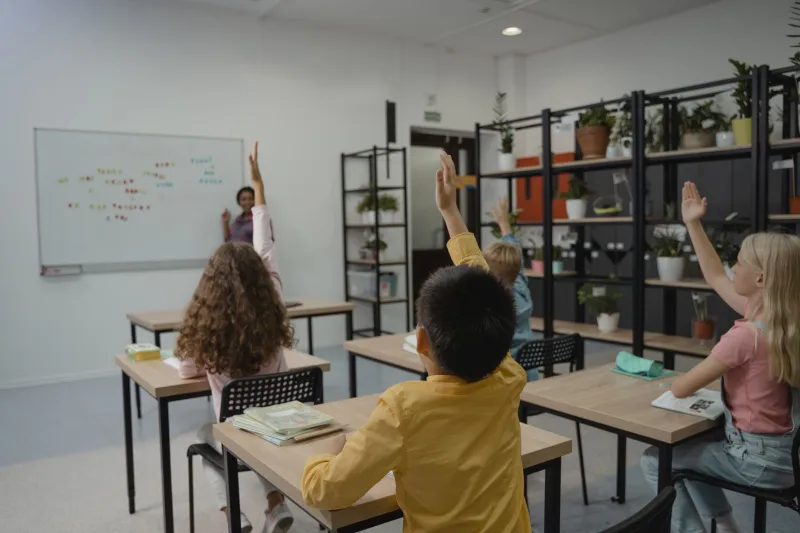
Somewhere in a fifth-grade classroom in Tucson, Arizona, a ten-year-old named Marcus checks on his pothos every single morning before he even takes off his backpack. He tilts the pot slightly toward the window. He fingers the soil. He writes three sentences in a worn composition notebook about what he observes. Marcus has been doing this since September. It's now April, and his teacher, Renata Villanueva, says he's a different kid than the one who walked in at the start of the year.
"He used to be the first one done with everything and the last one to care about any of it," she says. "Now he's patient. He asks questions. He notices things."
The pothos did that.
Or more precisely — the relationship did.
What Plant Mentorship Actually Looks Like in Practice
Plant mentorship programs vary in structure depending on the teacher, the grade level, and the available resources. But the core idea is elegantly simple: each student in the class is assigned one plant at the beginning of the school year and becomes its primary caretaker for the duration. Not a shared class plant. Not a rotating responsibility. Their plant.
Some teachers pair students with small succulents or easy-care pothos cuttings. Others go bigger — herb starts, flowering annuals, even small tomato plants in grow bags on windowsills. The plant lives in the classroom, but the student owns the relationship. They water it, monitor it, troubleshoot problems, research its needs, and document its growth over time.
The documentation piece is where a lot of the academic magic happens. Teachers typically ask students to keep a plant journal — sketching leaf structure, recording watering schedules, noting changes in color or growth rate, and eventually connecting those observations to broader science concepts like photosynthesis, nutrient cycles, and root systems.
But the emotional piece? That's where things get genuinely interesting.
The Psychology of Caring for Something That Can't Ask for Help
Developmental psychologists have long understood that nurturing relationships — even with non-human living things — can build empathy, emotional regulation, and a sense of agency in children. What makes plants particularly compelling as subjects of student care is their combination of total dependence and quiet feedback.
A plant can't cry when it's thirsty. It can't wag its tail when you walk in the room. It communicates exclusively through physical symptoms — drooping leaves, yellowing edges, stunted growth — and learning to read those signals requires a kind of attentiveness that most kids aren't naturally asked to develop in traditional school settings.
Jamie Okonkwo, a middle school science teacher in Columbus, Ohio, who has run a plant mentorship program for six years, puts it plainly: "When a kid's plant starts to struggle, they feel it. I've seen kids get genuinely upset, not because they're being graded on it, but because they actually care. That's not something you manufacture with a rubric."
Okonkwo has noticed consistent patterns over the years. Students who struggle with impulse control often become more measured in their approach to problem-solving when a living thing is depending on them. Students with anxiety sometimes find the routine of daily plant care grounding. And students who have historically disengaged from academics frequently find a point of entry through the concrete, observable nature of plant science.
"It meets kids where they are," he says. "There's no wrong answer when you're just observing. You're just looking and recording what's real."
Systems Thinking Grows in the Soil, Too
One of the less-discussed benefits of long-term plant mentorship is its potential to build systems thinking — the ability to understand how interconnected variables affect outcomes over time. This is a foundational skill for environmental literacy, and it's notoriously difficult to teach through abstraction alone.
When a student watches their basil plant bolt in response to temperature changes, or notices that their succulent's leaves are going soft because of overwatering, they're experiencing systems thinking in real time. Cause and effect. Variables and outcomes. The slow, non-linear logic of living systems.
Villanueva structures her program to make these connections explicit. "By February, I'm asking my students to write a 'plant health report' where they have to explain not just what's happening with their plant, but why — and what they're going to do about it. That's scientific reasoning. That's also life skills."
She's started weaving in broader environmental concepts as the year progresses, connecting individual plant health to classroom air quality, to the water cycle, to the idea that every living system — from a single pothos to an entire ecosystem — is made up of relationships and dependencies.
"I want them to see that their plant isn't separate from the world," she says. "It's a small version of the whole thing."
What the Data (and the Teachers) Are Saying
Formal research on plant mentorship programs specifically is still emerging, but the evidence base around nature-based learning and biophilic classroom design is substantial. Studies consistently show that sustained engagement with living organisms improves student attention, reduces stress markers, and increases prosocial behavior. Teachers running these programs informally corroborate those findings.
Okonkwo tracks a simple metric: office referrals. "In the years I've run this program, the students who are most engaged with their plants — who are really into it — have significantly fewer behavioral incidents in the second half of the year. That's not a controlled study. But it's not nothing, either."
Villanueva points to something harder to quantify but equally compelling: the way students talk about their plants to other people. "Parents come in for conferences and the kids drag them over to the windowsill first thing. They're proud. They want to show off something they've kept alive and helped grow. That pride is real, and it transfers."
Getting Started Without Overcomplicating It
If you're a teacher reading this and thinking it sounds great but logistically daunting, take a breath. You don't need a greenhouse, a grant, or a green thumb to make this work. You need a few inexpensive plants, a willingness to let kids take the lead, and a structure that builds in regular reflection time.
Start small. Pothos, snake plants, and spider plants are nearly indestructible and tolerant of the kind of inconsistent care that beginners provide. Pair each plant with a student based on personality if you can — the kid who needs to slow down might benefit from a plant that requires careful, measured watering. The kid who needs a confidence boost might thrive with a fast-growing vine that rewards attention quickly.
Build the journaling habit early and keep it low-stakes. Three sentences, a quick sketch, a question they want to answer. Over time, those entries become a record of growth — both the plant's and the student's.
And when a plant dies? Don't treat it as a failure. Treat it as data. Some of the richest conversations Okonkwo has had with his students have started with a dead plant and a question: What do you think happened? What would you do differently?
That's not just science. That's resilience.
The Bigger Picture
There's something quietly radical about asking a child to be responsible for a living thing over the course of an entire school year. In a culture that increasingly rewards speed and instant feedback, plant mentorship is a deliberate act of slowness. It asks students to pay attention over time, to care without immediate reward, and to understand that living systems don't follow the same logic as apps or algorithms.
That might be the most important lesson of all.
Marcus, the fifth grader in Tucson, is already thinking about what happens to his pothos at the end of the school year. He's asked Ms. Villanueva if he can take it home.
She said yes.