When the Classroom Becomes a Nursery: Student-Grown Plants Are Taking Root Across Entire Communities

Photo by Photo by Luba Glazunova on Unsplash on Unsplash
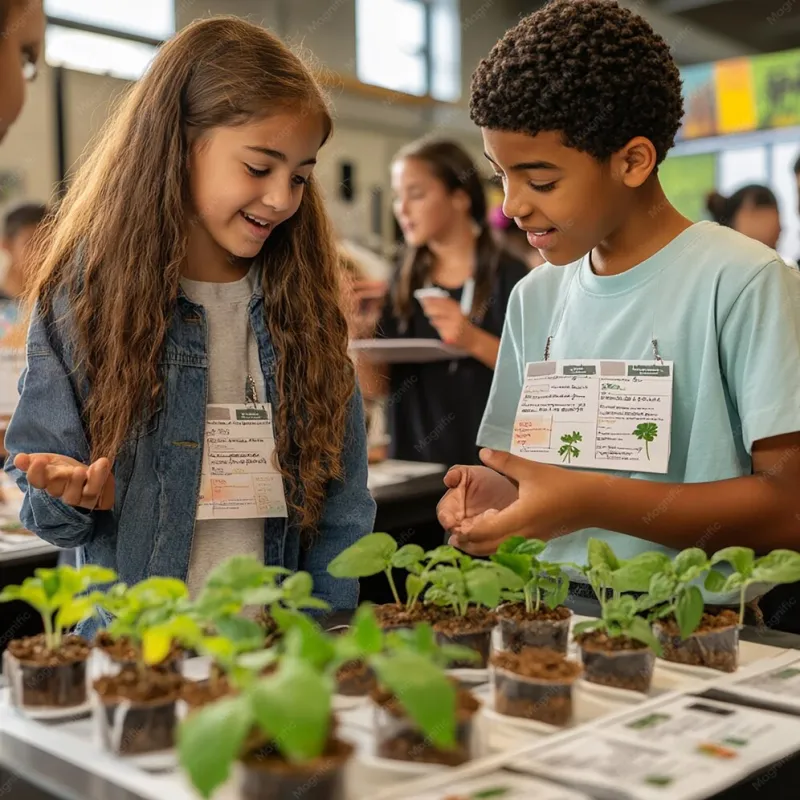
There's a moment that every teacher who's run a propagation project knows well. A student — maybe one who hasn't been particularly engaged all semester — holds up a tiny pothos cutting that has finally sprouted roots in its little cup of water. Their face lights up. They did that. They made something grow.
Now imagine that same student walking into the local public library two weeks later and placing that plant on a shelf, knowing it's going to sit there, clean the air, and make the space a little more alive. For everyone.
That's the power of taking classroom plant initiatives beyond the classroom walls. And more schools across the country are figuring out how to do exactly that.
Why Stop at the Classroom Door?
Classroom plant projects are already doing a lot of heavy lifting. They teach biology, build responsibility, improve air quality, and give students something tangible to care about. But there's a ceiling to what a single room can hold — physically and educationally.
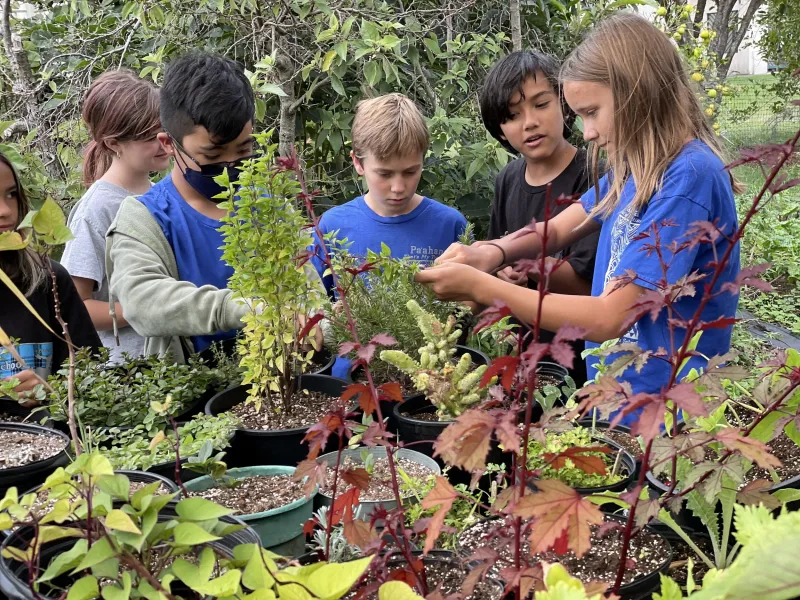
Scaling those projects into community giveaway programs and neighborhood propagation exchanges blows that ceiling wide open. Suddenly, students aren't just learning science. They're practicing environmental stewardship in real time, building social connections across their community, and seeing firsthand that something small — a leaf, a cutting, a handful of soil — can have an outsized impact on the world around them.
That's not a small thing. That's the whole point.
Getting the Logistics Right (Without Losing Your Mind)
The leap from "we have some extra cuttings" to "we're running a community plant exchange" can feel daunting, but it doesn't have to be. The key is starting simple and building systems as you go.
Start with one easy propagator. Pothos, spider plants, snake plants, and heartleaf philodendrons are practically designed for this kind of project. They root quickly, survive in low light, and tolerate the kind of inconsistent watering that comes with, well, real life. If your students can grow it, a neighbor with no plant experience can keep it alive.
Set up a dedicated propagation station. A corner of your classroom — a shelf, a windowsill, a cart — becomes the nursery. Label cuttings with student names and propagation dates. Track root development on a shared chart. Make the science visible and ongoing.
Create a simple intake and distribution system. A spreadsheet works fine. Students log what's been propagated, when it's ready to give away, and where it ends up. This doubles as a data collection exercise and keeps the project from turning into a chaotic pile of cups on your desk.
Partner with community anchor points. Local libraries, community centers, senior living facilities, food pantries, and neighborhood health clinics are often thrilled to receive free plants — and they provide a ready-made audience for student-grown greenery. Reach out early, explain what you're doing, and let those relationships evolve naturally.
The Social-Emotional Layer You Didn't See Coming
Here's something that surprises a lot of teachers the first time they run one of these programs: the emotional impact on students is enormous, and it often shows up in unexpected ways.
When kids learn that the plant they propagated is now sitting in the waiting room of a community health clinic — improving air quality for families who might be stressed, sick, or anxious — something shifts. They understand, maybe for the first time in a concrete way, that their actions extend beyond themselves. That they have the ability to improve environments they don't even occupy.
For students who struggle to see themselves as capable or impactful, that realization can be genuinely transformative. It connects environmental education to something much deeper: a sense of agency and belonging in the world.
Building in reflection time matters here. Have students write briefly about where their plant went and what they hope it does for the people who encounter it. Simple, but powerful.
Turning It Into a Real Exchange
A giveaway program is great. A community propagation exchange is even better — because it creates a two-way relationship rather than a one-directional donation.
Here's how exchanges tend to work: community members bring in cuttings or seeds from their own plants, contribute them to the school's propagation station, and in return receive a propagated plant from the student nursery. Students get a wider variety of plants to work with. Community members feel like genuine participants rather than recipients. And the school becomes a living hub of botanical knowledge-sharing.
Some schools have taken this further by hosting quarterly "plant swap" events in the school gym or courtyard — open to families, neighbors, and local organizations. These events tend to become genuinely beloved community fixtures. They're low-cost, high-engagement, and they put student work front and center in a way that a science fair never quite manages.
Connecting the Dots to Environmental Education
It's worth being explicit with students about why this matters environmentally — not just as a nice thing to do, but as a real contribution to local ecological health.
Indoor plants improve air quality by filtering certain volatile organic compounds and adding humidity to dry indoor spaces. When student-propagated plants end up in homes, libraries, and community centers across a neighborhood, that's a measurable, distributed environmental benefit. It's also a lesson in how individual actions aggregate into collective impact — which is, frankly, one of the most important environmental concepts we can teach right now.
Tie the project to conversations about urban heat islands, the lack of green space in many low-income neighborhoods, and the documented mental health benefits of exposure to plants and nature. Students start to see their little propagation cups as part of a much larger story.
A Few Practical Tips Before You Launch
- Get administration on board early. Frame it as a community engagement and STEM integration initiative — because that's exactly what it is.
- Involve students in every decision. Which plants to propagate, where to donate them, how to design the giveaway labels — all of it. Ownership drives engagement.
- Document everything. Photos, maps of where plants ended up, student reflections. This becomes your program's story, and it's invaluable for grant applications, school board presentations, and inspiring other teachers.
- Don't overextend in year one. A small, well-run program is infinitely better than an ambitious one that collapses under its own weight. Grow it like you'd grow any plant — steadily, with patience.
The Bigger Picture
Every plant that leaves your classroom carries something invisible with it: the knowledge, care, and intention of the student who grew it. When that plant ends up in a neighbor's window or a library reading nook, it's doing more than filtering air. It's making a quiet argument that young people are capable of improving their communities — and that science education isn't something that stays locked inside a building.
That's the vision behind everything we do here at A Plant In Every Classroom. Not just greener schools, but greener neighborhoods. Not just students who understand photosynthesis, but students who understand that they have the power to make the world around them more alive.
One cutting at a time.