One Plant, Every Subject: How Classroom Greenery Is Quietly Revolutionizing the Way Kids Learn
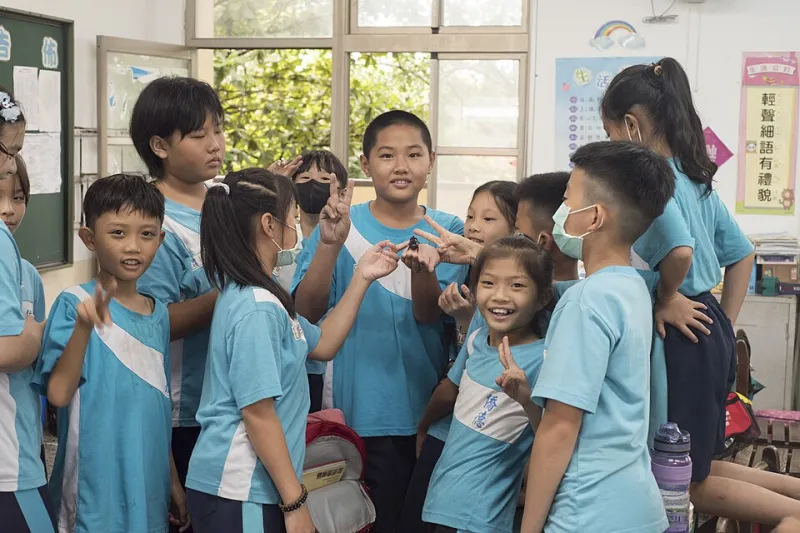
Photo: LiCheng Shih, CC BY 2.0, via Wikimedia Commons
There's a potted tomato plant sitting on a windowsill in Maria Delgado's third-grade classroom in Austin, Texas. To a casual observer, it's just a plant. To her students, it's a math problem, a writing prompt, a science experiment, and—on the days when something goes wrong with the soil or the leaves start to droop—a lesson in patience and collective responsibility.
"I didn't set out to build a whole curriculum around a tomato plant," Delgado admits, laughing. "But once the kids started asking questions, I realized the plant was doing more teaching than I was."
This kind of accidental magic is happening in classrooms from Vermont to California, where educators are waking up to the fact that a living, growing organism is one of the richest cross-curricular tools available to them—and it costs about four dollars at a hardware store.
Math That Grows on You
One of the most natural entry points is mathematics. Plants change measurably over time, which makes them ideal subjects for data collection, graphing, and statistical thinking at almost any grade level.
In Kevin Osei's fifth-grade class in suburban Atlanta, students measure their bean sprouts every Monday morning, logging height, leaf count, and stem diameter in a shared spreadsheet. By mid-semester, they're calculating weekly growth rates, building bar graphs, and debating why one plant grew faster than another. "They don't even realize they're doing math," Osei says. "They think they're just arguing about whose plant is winning."
For younger students, counting leaves, sorting seeds by size, or estimating how many cups of water a plant needs per week builds foundational number sense in a context that feels genuinely meaningful. Unlike a worksheet, the plant talks back. If you water it wrong, you find out.
Older students can go further—calculating surface area of leaves, exploring ratios in fertilizer dilution, or graphing the relationship between light exposure and growth rate. The data is real, the variables are real, and the stakes feel real too, because a living thing is depending on their analysis.
Science Beyond the Textbook
Photosynthesis is one of those concepts that students memorize and immediately forget. But ask a kid to cover one leaf of their classroom plant with black construction paper for a week and then compare it to an uncovered leaf, and suddenly the idea that light is food becomes visceral and unforgettable.
Jessica Tran, a middle school science teacher in Portland, Oregon, has built an entire inquiry unit around this principle. Her students design their own experiments—testing different light wavelengths using colored cellophane, comparing soil types, or investigating whether music or talking to a plant affects its growth. "The results are sometimes inconclusive and sometimes surprising," she says. "But that's the point. They're learning how science actually works."
Plants also make excellent vessels for teaching about ecosystems, nutrient cycles, and the water cycle. When students understand that the soil in their classroom pot is a living community—full of fungi, bacteria, and microscopic organisms—they start to see their plant as part of something much larger than a windowsill.
Writing Roots
Language arts teachers have found plants surprisingly fertile ground for developing voice and observation skills. Daily journaling about a classroom plant—What does it look like today? What changed since yesterday? What do you think it needs?—builds the habit of close, patient attention that strong writers depend on.
In one Chicago-area fourth-grade class, students write weekly "letters" to their plants, describing what they've done to care for them and what they hope to see next. The exercise sounds whimsical, but the results are often remarkably rich. Kids who struggle to write three sentences about their weekend will fill a page when they're describing something they've watched grow from a seed.
Poetry, descriptive paragraphs, persuasive essays about why the school should fund a garden—plants can anchor almost any writing assignment. They give students something concrete to look at, touch, and smell, which is exactly what reluctant writers often need.
Social-Emotional Learning in the Soil
Perhaps the most surprising—and most powerful—dimension of plant-based learning is what it does for students emotionally. Caring for a living thing requires consistency, attentiveness, and the ability to tolerate uncertainty. These are not small skills.
"I have students who really struggle with anxiety," says Delgado. "And I've noticed that the plant-care routine calms them down in a way that's hard to explain. There's something about having a small, manageable responsibility that feels safe."
Shared plant care also builds community. When a class plant dies—and sometimes it does—it creates a genuine opportunity to talk about loss, failure, and trying again. When it thrives, students feel collective pride. The plant becomes a kind of classroom mascot with roots.
For students navigating difficult home situations, a classroom plant can offer something rare: a relationship that is predictable and responsive. You give it water, it grows. The feedback loop is honest and immediate.
Environmental Justice Through a Leaf
For educators who want to connect classroom learning to the wider world, plants open a natural pathway into environmental justice conversations. Why do some neighborhoods have more trees and green space than others? Who has access to fresh food and who doesn't? What does it mean that many low-income urban schools lack gardens while wealthier suburban schools have greenhouse programs?
These questions don't have easy answers, but they're worth asking—and a classroom plant provides a grounded, tangible starting point for the conversation. Students who've grown their own food, even just a few cherry tomatoes, understand in a different way why food access matters.
Teachers in cities like Detroit, Baltimore, and Los Angeles are connecting classroom plant projects to community garden initiatives, school lunch programs, and local urban farming movements. The windowsill becomes a portal to the neighborhood, and the neighborhood becomes a lens for understanding systems.
Getting Started Without Overthinking It
If all of this sounds like a lot, take a breath. You don't need a greenhouse or a grant or a curriculum overhaul. You need one plant. Maybe two.
Start with something forgiving—a pothos, a bean sprout, a sunflower seedling. Let your students name it. Let them argue about where to put it and how often to water it. Follow their questions wherever they lead. The curriculum will show up on its own.
That's the thing about living things. They have a way of making themselves relevant.