What's Really Going On Under the Dirt: A Teacher's Guide to Soil Health and Happy Indoor Plants

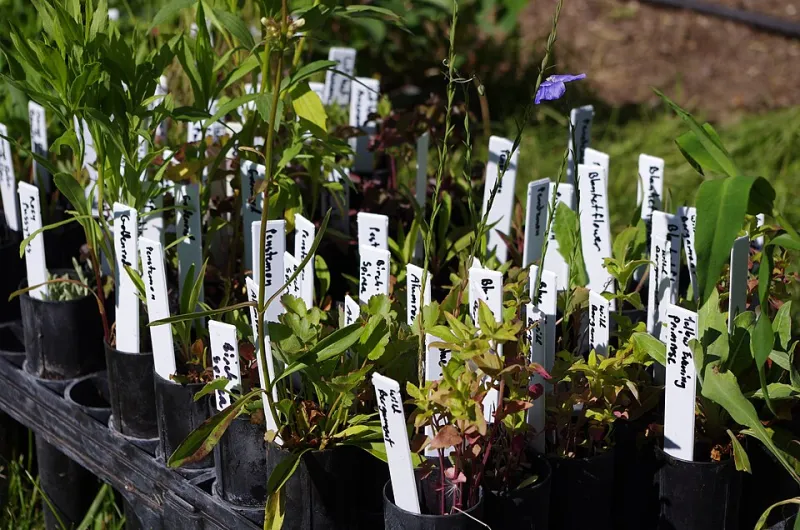
Photo: Giles Laurent, CC BY-SA 4.0, via Wikimedia Commons
Let's be honest: a lot of classroom plants don't make it to spring.
They start out looking promising—green, upright, full of potential—and then somewhere around November, they start to look a little tired. By January, there's yellowing. By March, you're quietly replacing them before the students notice.
If this sounds familiar, you're not alone, and you're probably not doing anything obviously wrong. The real issue is often invisible, happening in the few inches of soil at the bottom of a plastic pot. Understanding what's down there—and what it needs—can be the difference between a plant that limps along and one that genuinely thrives.
The Hidden World in a Handful of Dirt
Soil is not inert. It is, in fact, one of the most biologically dense environments on earth. A single teaspoon of healthy garden soil contains somewhere between one hundred million and one billion bacteria, along with thousands of species of fungi, protozoa, nematodes, and other microscopic organisms that most of us never think about.
These organisms are not passengers. They are active participants in the life of every plant. Beneficial bacteria break down organic matter and release nutrients in forms that plant roots can absorb. Mycorrhizal fungi form symbiotic relationships with roots, dramatically extending the plant's reach and water-uptake capacity. Protozoa graze on bacteria and, in doing so, release nitrogen that feeds the plant. The whole system is interconnected in ways that scientists are still working to fully understand.
Here's the problem: most commercial potting mixes—the ones sold at big-box stores and garden centers across the country—are not designed to support this microbial community. They're designed to be lightweight, sterile, and shelf-stable. That's great for shipping and storage. It's not so great for long-term plant health.
Why "Sterile" Potting Mix Is a Double-Edged Sword
Sterilization kills pathogens, which sounds like a good thing—and in the short term, it is. A sterile mix reduces the risk of fungal diseases and pest infestations when you first bring a plant indoors. But it also eliminates the beneficial organisms that help plants thrive over time.
Without a living microbial community, nutrients don't cycle efficiently. Organic matter doesn't break down. The plant becomes entirely dependent on whatever synthetic fertilizer you add, and even then, it often struggles. Over months in a classroom environment—low humidity, inconsistent watering, artificial light—the soil structure degrades, compacts, and becomes increasingly hostile to roots.
This is why so many classroom plants look fine in September and exhausted by February. The soil has essentially run out of biological support.
Common Indoor Growing Problems (and What's Actually Causing Them)
Yellowing leaves: Often blamed on overwatering, and sometimes that's accurate. But yellowing can also signal nitrogen deficiency, which in a biologically depleted soil happens even when you're fertilizing regularly. If the microbial community isn't there to process nutrients, the plant can't access them regardless of what you add to the pot.
Root rot: This one is usually related to water—but the underlying cause is often compacted, poorly draining soil that's lost its structure. Healthy soil has a porous, crumbly texture that allows water to move through and air to reach roots. Degraded potting mix becomes dense and waterlogged, creating exactly the anaerobic conditions that pathogenic fungi love.
Stunted growth: If a plant stops growing despite adequate light and water, the soil microbiome is often the culprit. Without beneficial fungi and bacteria facilitating nutrient exchange, plants hit a ceiling.
Fungus gnats: These annoying little pests lay eggs in moist, organic-rich soil. They're not just a nuisance—their larvae feed on roots and can seriously damage young plants. Overwatering is the most common trigger, but soil that stays wet too long due to poor drainage is the real structural problem.
Building a Better Classroom Potting Mix
You don't need a degree in soil science to give your classroom plants a fighting chance. A few simple adjustments to your potting approach can make a significant difference.
Add perlite or coarse sand. Most standard potting mixes benefit from the addition of about 20–30% perlite (those small white pellets) or coarse horticultural sand. This improves drainage and aeration, which is especially important in classroom environments where pots often sit in saucers and watering schedules are inconsistent.
Incorporate a small amount of compost. Even a tablespoon or two of finished compost mixed into your potting medium introduces beneficial microorganisms and provides a slow-release source of organic nutrients. Look for compost at your local garden center—many municipalities also offer free or low-cost compost to residents and schools.
Consider a mycorrhizal inoculant. These products, available at most garden centers and online, introduce beneficial fungal spores directly to your soil. They're inexpensive, easy to use (typically just a small amount mixed into the potting medium or dusted on roots at planting), and can significantly improve plant resilience.
Avoid over-fertilizing. Synthetic fertilizers, especially in high concentrations, can actually suppress beneficial microbial activity. If you're fertilizing, go low and slow—half the recommended dose, applied less frequently than the label suggests.
Watering Smarter in a Classroom Setting
Watering is where most classroom plants run into trouble, and it's understandable—schools have weekends, holidays, and the occasional substitute who either drowns everything or forgets entirely.
The most reliable guidance is to water deeply and infrequently rather than a little bit every day. Allow the top inch or two of soil to dry out between waterings for most common classroom plants. If you're not sure, stick your finger in the soil. If it feels moist an inch down, wait.
Self-watering pots with built-in reservoirs are genuinely worth the investment for classroom settings. They buffer against the feast-or-famine watering cycle that stresses plants and degrades soil structure over time.
Making the Invisible Visible: A Classroom Opportunity
Here's the thing that makes all of this especially exciting for educators: the soil microbiome is a genuinely fascinating scientific frontier, and it connects directly to concepts students are already learning about ecosystems, decomposition, and food webs.
You don't have to teach a graduate seminar on microbiology. But even a brief conversation about the fact that the dirt in their classroom pot is alive—full of organisms too small to see but essential to the plant's survival—can shift the way students think about soil, ecosystems, and the interconnectedness of living things.
That's the kind of learning that sticks. Not because it was on a test, but because it changed the way they see the world every time they look at the ground beneath their feet.
Healthy soil, it turns out, is one of the best environmental education tools you've never thought to use.