Dirt Under Their Fingernails, Data on the Board: The Science Behind Plants and Student Achievement
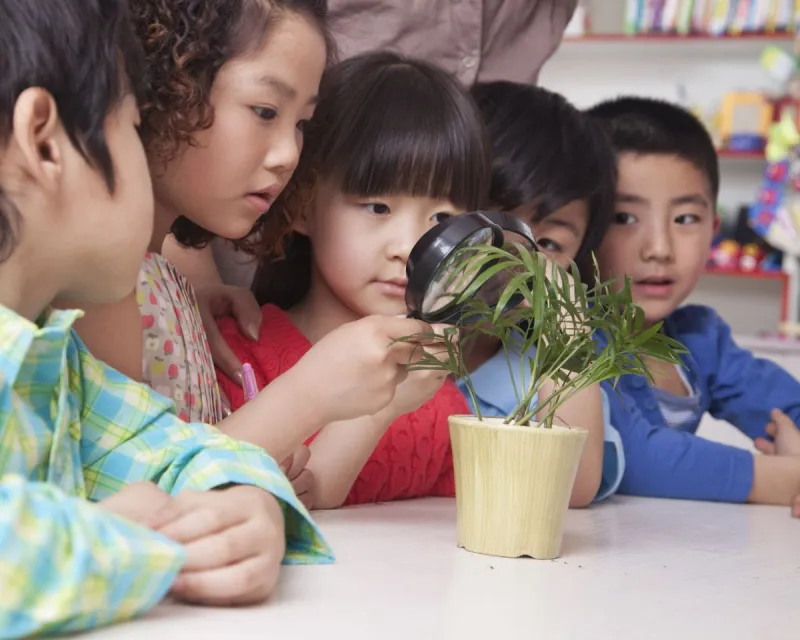
Something interesting keeps happening in classrooms where teachers have added a few potted plants to the mix. Students start asking more questions. They linger after the bell. And when science test scores come back, the numbers look a little better than expected.
This isn't a coincidence. Researchers, educators, and cognitive scientists are starting to connect the dots between hands-on plant care and genuine academic gains—particularly in STEM subjects. And the findings are compelling enough that even the most budget-conscious, data-driven administrator might want to hear them out.
What the Research Actually Says
Let's start with the science, because that's where the real story lives.
A 2019 study published in the International Journal of Environmental Research and Public Health found that students in classrooms with living plants demonstrated improved concentration and memory retention compared to peers in plant-free environments. That alone is notable. But what's especially interesting is why this happens—and it goes deeper than just having something pretty to look at.
Edward O. Wilson's concept of biophilia—the idea that humans have an innate, evolutionary drive to connect with other living organisms—offers a neurological framework for understanding what teachers have been observing anecdotally for years. When students interact with living things, their brains respond differently than they do to textbooks or screens. Cortisol levels drop. Attention sharpens. The parasympathetic nervous system—your body's "rest and digest" mode—gets a nudge, which turns out to be exactly the state you want a student in when you're asking them to absorb complex information.
Dr. Ming Kuo, a researcher at the University of Illinois whose work on nature and attention has been widely cited in educational circles, has described this effect as nature's ability to "restore" directed attention—the kind of focused, deliberate thinking that school demands a lot of. Plants in the classroom, even passive ones, appear to support that restoration process. Add active care—watering, pruning, observing, recording—and the effect seems to compound.
Teachers Who've Measured the Difference
Research is one thing. But talk to educators who've been running plant programs in their classrooms for a few years, and you start hearing stories that feel almost too consistent to be coincidental.
Marcia Telles, a sixth-grade science teacher at a public middle school in Sacramento, California, introduced a small classroom garden three years ago as a supplemental project. She wasn't expecting dramatic results—just a way to make the curriculum feel a little more alive. What she got surprised her.
"I started keeping informal notes on engagement levels," she says. "The kids who were most involved in caring for the plants—checking on them, logging growth, troubleshooting when something went wrong—those were the same kids who started asking better questions during our plant biology unit. Not just memorizing facts, but actually thinking like scientists."
By the end of that first year, Telles noticed that her plant-engaged students were outperforming their peers on unit assessments by an average of about 12 percentage points. She's careful not to overstate what that means—she's a teacher, not a researcher, and there are plenty of variables she can't control. But three years in, the pattern has held.
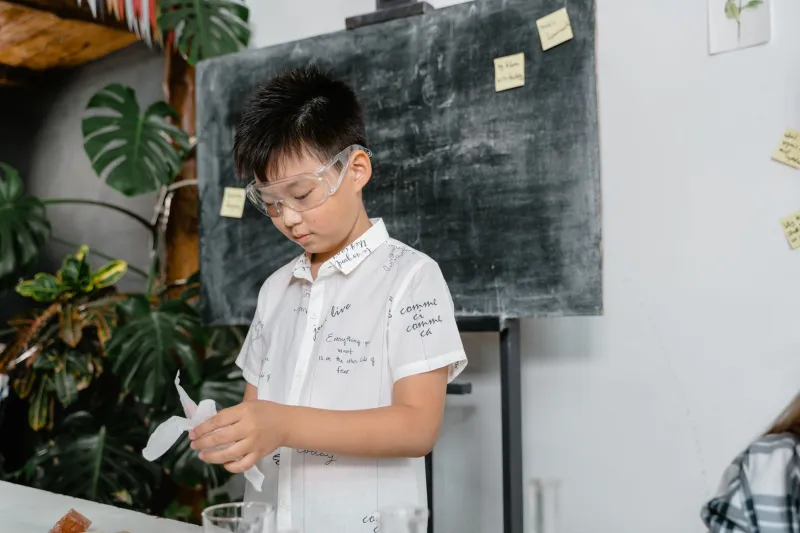
Similar observations have come from teachers in very different contexts. James Okafor, who teaches high school biology in a Title I school in Atlanta, Georgia, started a propagation station in his classroom partly as a low-cost way to give students something tactile to work with. He's found that the practice of observing and documenting plant growth has translated directly into stronger lab skills.
"Science is about noticing things," he says. "When you're responsible for a plant, you get really good at noticing. You notice when a leaf looks different. You notice when the soil is too dry. That observational muscle—that's the same one you need to be good at science."
The Psychological Piece Nobody Talks About Enough
Beyond the neuroscience, there's a psychological dimension to plant care that deserves more attention in conversations about academic performance.
Nurturing a living thing—and watching it respond to your care—builds something that's increasingly rare in modern classrooms: a genuine sense of agency. Students who tend plants learn, in a very concrete way, that their actions have consequences. That the world responds to them. That they can cause growth.
For kids who've internalized the idea that school is something that happens to them rather than something they participate in, that shift can be transformative. Research on self-efficacy—the belief in one's own ability to succeed—consistently shows it as a predictor of academic performance. Plant care, it turns out, is a surprisingly effective way to build it.
There's also the matter of failure, which plants deliver honestly and without judgment. A wilting succulent doesn't make a student feel stupid. It gives them a problem to solve. And working through that problem—researching, adjusting, trying again—is exactly the kind of iterative thinking that STEM education is supposed to cultivate.
Making the Case to Your Administration
If you're a teacher who already believes in this and you're looking for ammunition to bring to a skeptical principal or department head, here's the short version of the pitch:
Plants are cheap. A propagated cutting costs nothing. A packet of seeds costs less than a dollar. The overhead for a classroom plant program is minimal compared to almost any other educational intervention.
The research supports it. You don't need a randomized controlled trial to cite credible work on biophilia, attention restoration, and the cognitive benefits of nature exposure. That literature exists, and it's growing.
It's cross-curricular. Plant care touches biology, chemistry, math (measurement, data logging), writing (observation journals), and even social-emotional learning. It's not a detour from the curriculum—it's a way into it.
Teachers are documenting results. Anecdotal evidence from classrooms across the country consistently points in the same direction. Students who care for plants engage more deeply with science content.
A Living Classroom Is a Learning Classroom
None of this is to say that a potted fern on the windowsill is going to single-handedly close achievement gaps or fix everything that's broken about science education in America. That would be a wild overstatement.
But the evidence—both the peer-reviewed kind and the kind that lives in teachers' gradebooks—suggests that giving students something alive to care for does something real to the way they show up for learning. It activates curiosity. It builds patience and observational skill. It makes the abstract concrete.
And in a world where student engagement in science is genuinely hard to come by, that's not a small thing.
So if you've been on the fence about starting a plant program, or you've been looking for a way to justify the one you already have, consider this your data-driven permission slip. The research is pointing in a clear direction.
Grow something. Watch what happens.