What a Few Potted Plants Did for One of the Most Underfunded Schools in America
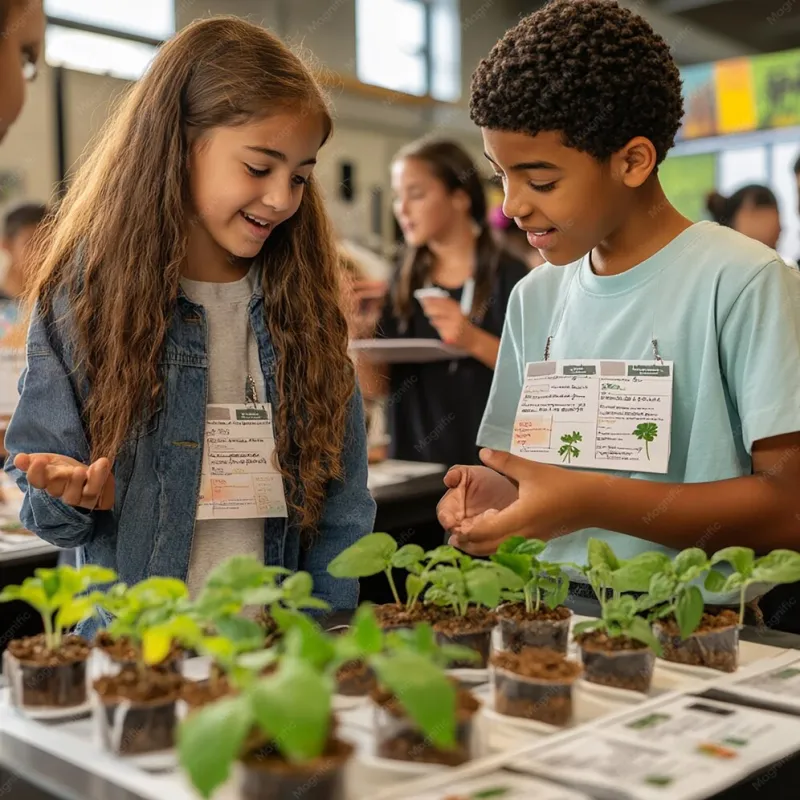
Photo: students tending indoor plants in underfunded urban school hallway, via unbeleafable.ph
Walk into certain school buildings in this country and you feel it immediately—that particular kind of institutional heaviness. Fluorescent lights humming overhead, scuffed linoleum floors, walls the color of old oatmeal. These are spaces that weren't designed to inspire anyone. And yet, in some of the most under-resourced districts across the US, something quietly radical is happening: educators are filling those spaces with plants. Not as decoration. As strategy.
The results, backed by a growing body of research and a handful of genuinely remarkable case studies, are hard to argue with.
Why the Physical Environment Matters More Than We Admit
There's a concept called biophilic design—the idea that humans have an innate need to connect with living systems and natural environments. It's been a buzzword in corporate architecture for years, showing up in tech campuses with living walls and sun-drenched atriums. But the same science applies in a Title I elementary school in Detroit or a middle school in rural Appalachia. Maybe even more so.
Research published in the journal Environment and Behavior found that students in classrooms with plants demonstrated better concentration and reported higher levels of satisfaction with their learning environment. A separate study out of the University of Exeter showed that introducing plants into workspaces—the logic extends to classrooms—improved productivity by up to 15 percent. And the American Horticultural Therapy Association has documented plant exposure as a measurable reducer of cortisol, the stress hormone that, in many high-pressure, low-resource school environments, is essentially running the show.
For kids who come to school carrying the weight of housing instability, food insecurity, or community trauma, a calmer nervous system isn't a luxury. It's a prerequisite for learning anything at all.
Hallways as Ecosystems: One School's Transformation
Take Roosevelt Elementary in a mid-sized Midwestern city—a school where, a few years ago, chronic absenteeism was hovering above 30 percent and teacher turnover was a near-annual crisis. A new principal arrived with a modest discretionary budget and a somewhat unusual idea: she wanted the building to feel alive.
Over two school years, her staff installed rolling plant carts in every major hallway, set up a small indoor garden station near the front office, and partnered with a local community college's horticulture program to maintain a rooftop container garden used by fifth graders for science class. The cost was low. The labor was mostly student-driven. And the shift in the building's atmosphere was, by multiple teacher accounts, almost immediate.
"Kids started lingering in the hallways in a different way," one fourth-grade teacher recalled. "Not causing trouble—just looking at things. Touching leaves. Asking questions. The building stopped feeling like something they were trapped in."
By the end of the second year, chronic absenteeism had dropped by nearly 11 percentage points. Standardized science scores for fifth graders—the ones most directly involved with the rooftop garden—improved significantly. Correlation isn't causation, and the school made other changes too. But the principal is clear about what she thinks catalyzed the cultural shift.
The Air Quality Argument No One Is Making Loudly Enough
Here's something that doesn't come up enough in education policy conversations: the air inside many school buildings is genuinely bad. The EPA has noted that indoor air can be two to five times more polluted than outdoor air, and older school buildings—which disproportionately serve low-income communities—often have poor ventilation, aging HVAC systems, and materials that off-gas volatile organic compounds.
Certain plants are remarkably effective at filtering indoor air. Snake plants, pothos, peace lilies, and spider plants have all been studied for their ability to absorb common pollutants like formaldehyde, benzene, and carbon monoxide. NASA's famous Clean Air Study, while conducted in a controlled setting, opened the door to decades of follow-up research confirming that plants do meaningfully improve indoor air quality in real-world environments.
For schools that can't afford a full HVAC overhaul—which is most of them—a thoughtful plant placement strategy isn't a consolation prize. It's a genuinely impactful intervention. And unlike a renovation, it can be implemented by a motivated teacher with a $200 grant and a free Saturday.
Environmental Justice and the Green Gap
There's an uncomfortable truth embedded in all of this: the schools least likely to have plants, gardens, or any meaningful exposure to nature are the ones serving the students who would benefit most. Wealthy suburban districts have greenhouse programs, manicured school gardens, and arboretums within field trip distance. Schools in lower-income urban and rural communities often have none of that.
That's not an accident. It reflects decades of disinvestment and a persistent, if rarely stated, assumption that "extras" like gardens are for schools that have already handled the basics. But framing botanical education as an extra gets it exactly backwards. Access to green space and living systems isn't a reward for academic achievement—it's part of what produces it.
Organizations working at the intersection of environmental justice and education are starting to push back on this framing in concrete ways. Programs like the National Farm to School Network and city-level urban agriculture initiatives are routing funding specifically toward high-need schools. Some states have begun including green schoolyard development in their climate resilience planning, recognizing that shade trees and rain gardens aren't just nice to have—they're infrastructure.
How to Start When You Have Almost Nothing
If you're a teacher reading this from a classroom with a broken window unit and a supply budget that ran out in October, the rooftop garden case study might feel pretty distant. That's fair. But the entry point for this work doesn't require a grant or an administrator who's bought in.
It starts with one plant on a windowsill. Then maybe a propagation station where students take cuttings and grow new plants from old ones. Then a hallway cart. Then a conversation with the principal about that unused corner of the courtyard.
Every school that has meaningfully transformed its environment through greenery started somewhere small. The research supports the investment. The students already know, even if they can't articulate it, that they deserve to learn in spaces that feel alive.
We just have to be the ones to start planting.